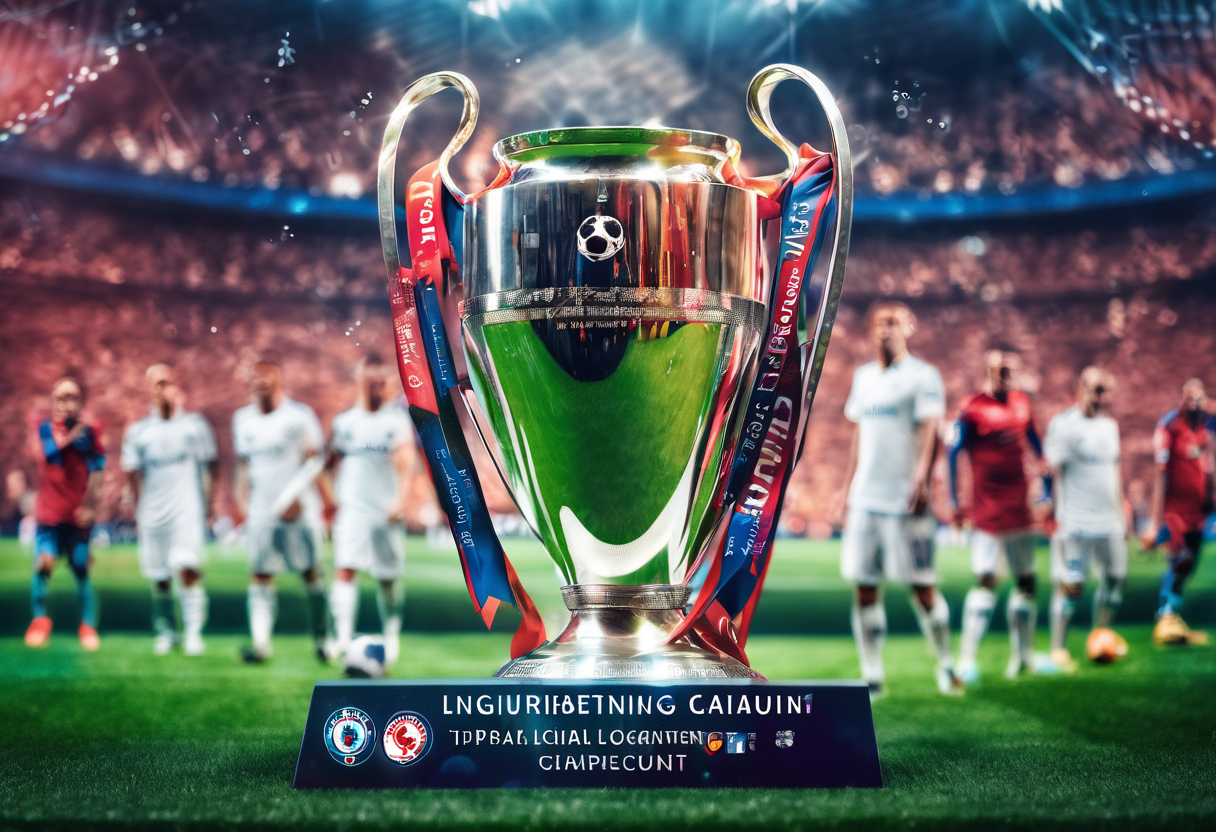
The Champions League trophy is one of the most prestigious and recognizable trophies in the world of sports. Known for its iconic design of a large silver cup with two handles, the trophy is coveted by football clubs across Europe. But how did the Champions League trophy come to be and what makes it such an important symbol in the world of football?
The origins of the Champions League trophy can be traced back to the 1950s when the European Champions Clubs’ Cup was first introduced. The cup, which was later renamed the European Cup, was awarded to the winner of the annual tournament between the top football clubs in Europe. However, it wasn’t until the 1992-1993 season that the cup was given its current name and underwent a major redesign. The new trophy, which was created by Jürg Stadelmann, featured a silver pedestal with a large silver cup on top, representing the strength and prestige of the competition. Today, the Champions League trophy is awarded to the winner of the UEFA Champions League, an annual tournament that brings together the top football clubs from different European countries.
Winning the Champions League trophy is not only a great honor for a football club, but also a major achievement that solidifies their place in football history. The trophy represents the pinnacle of success in European football and is a symbol of excellence, determination, and teamwork. It has been lifted by some of the greatest players and teams in the world, such as FC Barcelona, Real Madrid, and Manchester United, and continues to inspire future generations to strive for greatness. From its humble beginnings to its current iconic status, the Champions League trophy has become a significant part of football culture and will continue to hold a special place in the hearts of fans around the world.